Project Portfolio
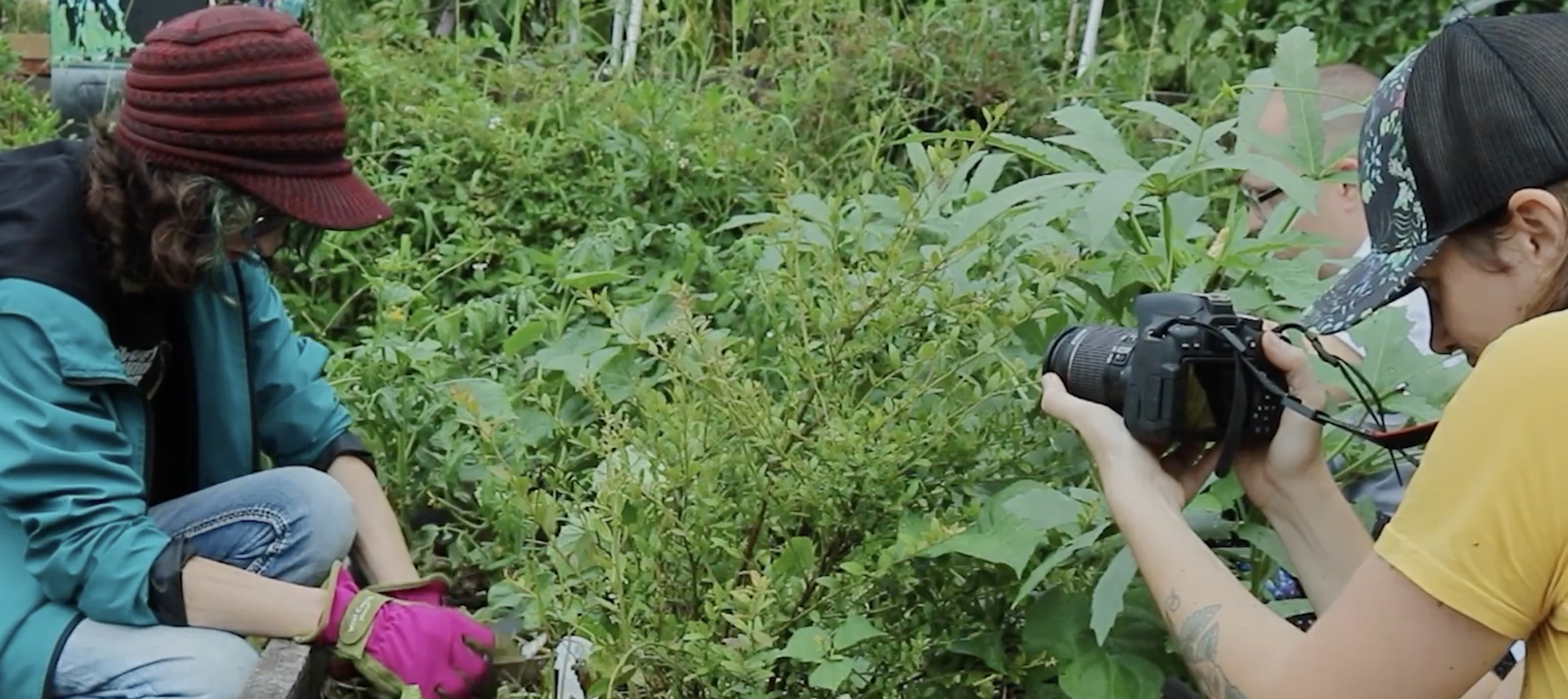
I use visual, narrative, and cartographic techniques to produce digital and tangible media to support teaching and learning. My ethical practice involves ongoing collaboration and consent of the communities depicted in these projects, and I strive towards material reciprocity whenever possible.
I am particularly excited about documentaries, storymaps, and zines for telling complex stories of the relationships between people and the lands they are in relation with during this time of accelerating change.
Anthologies
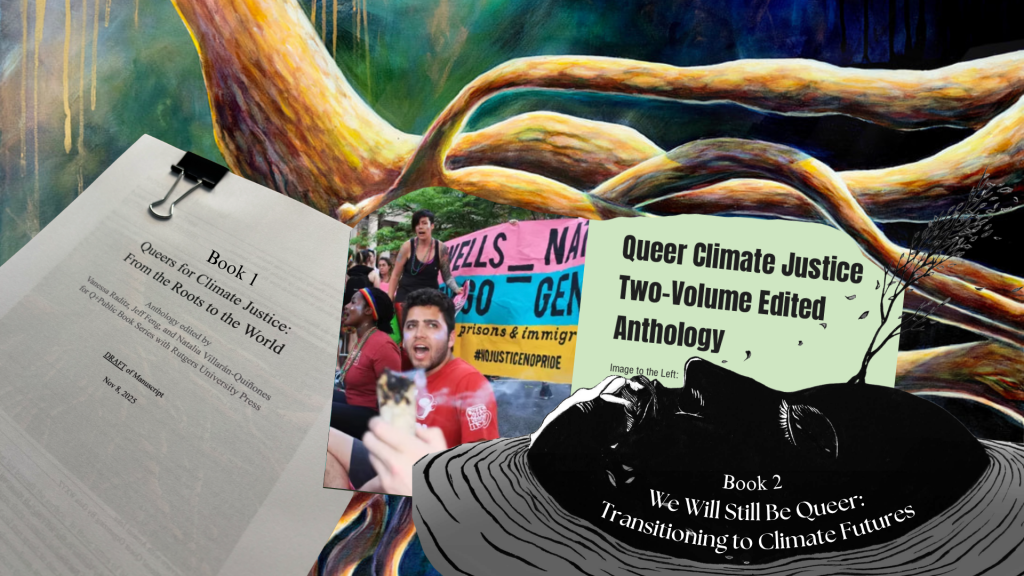
These collections of queer climate justice writing, interviews, poetry, and visual art explores the many dimensions of the emerging queer climate justice movement, including the experiences of disaster relief and recovery, the deep connection to land and place, and a desire to uproot logics of patriarchy and colonial racial capitalism.
“We Will Still Be Queer: Transitioning to Climate Futures” is intended for academic audiences and is under review with Washington University Press with an anticipated release in Fall 2027. It is co-edited by Jeff Feng and Michael Mikulewicz.
“Queers for Climate Justice: From the Roots to the World” is intended for popular, social movement audiences and is under contract with the Q+Public Book Series with Rutgers University Press. It is co-edited by Jeff Feng and Natalia Villarán-Quiñones.
Documentaries
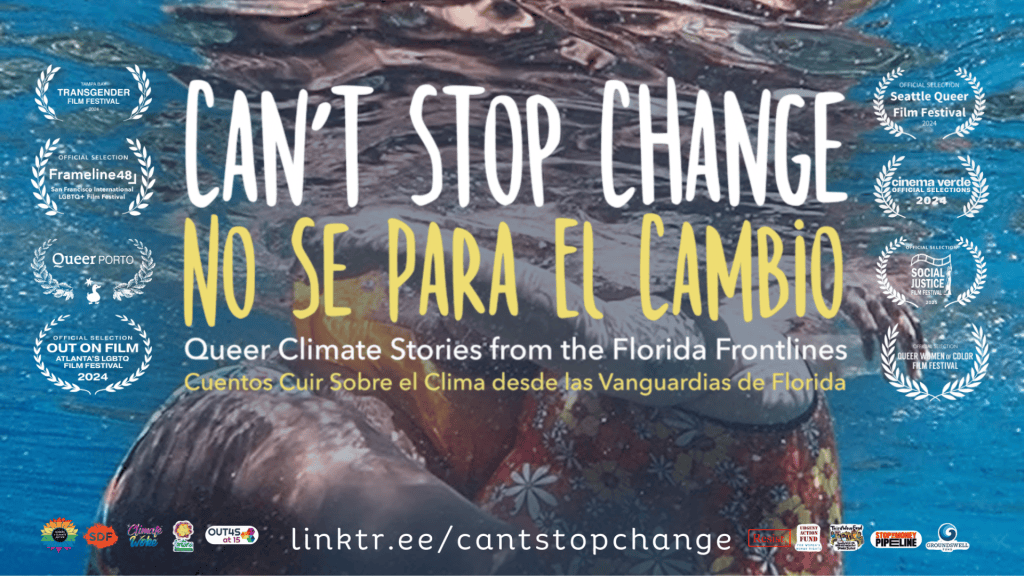
“Can’t Stop Change: Queer Climate Stories from the Florida Frontlines” is a collaborative documentary I had the absolute pleasure to co-produce, co-direct, and co-edit. It was also my first attempt at animation.
The film blends interviews with 15 LGBTQ2S+ artists, organizers, and educators across Florida and the Florida diaspora into an intersectional climate justice narrative. The documentary uses place-based storytelling to map the entanglements between legislative violence, environmental degradation, and community survival. We aim to balance political analysis with personal, uplifting narratives, aiming to inspire hope and action.
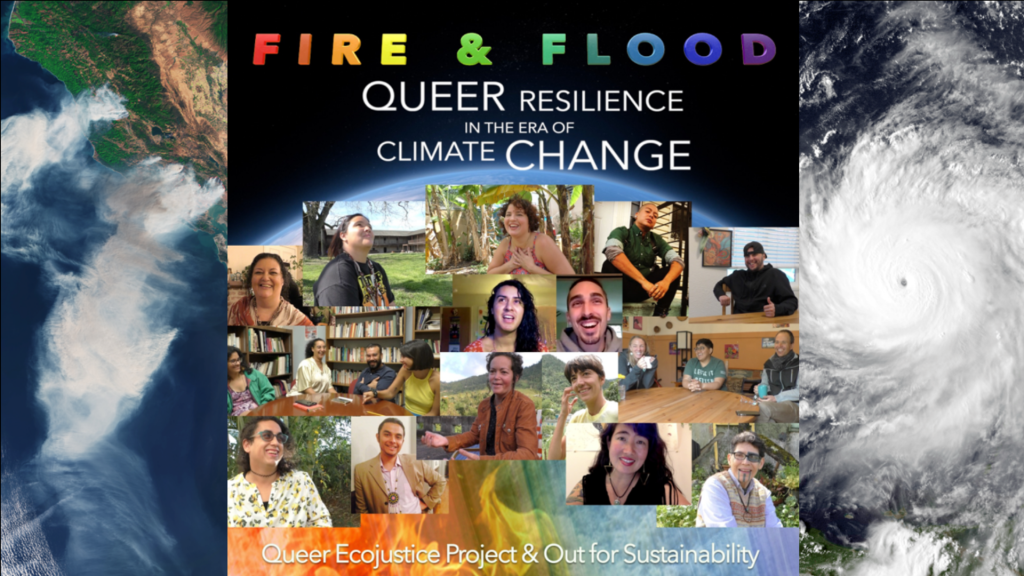
“Fire & Flood: Queer Resilience in the era of Climate Change” is my first documentary project, based in my lived experience of the Tubbs fire in Northern California in the fall of 2017. I began interviews with close collaborators in the fire’s aftermath to show at the 2018 Creating Change Conference, where I received feedback from educators about necessity and timeliness of media like this. So with little training, and a shoestring budget, I got to work.
The film explores how LGBTQ+ communities are disproportionately vulnerable to climate disasters – from the wildfires in California to Hurricane Maria in Puerto Rico – while also highlighting grassroots strategies for resilience, transition, and survival. I am working on reorganizing this project from a film to a multimedia online docuseries, based on feedback from educators.
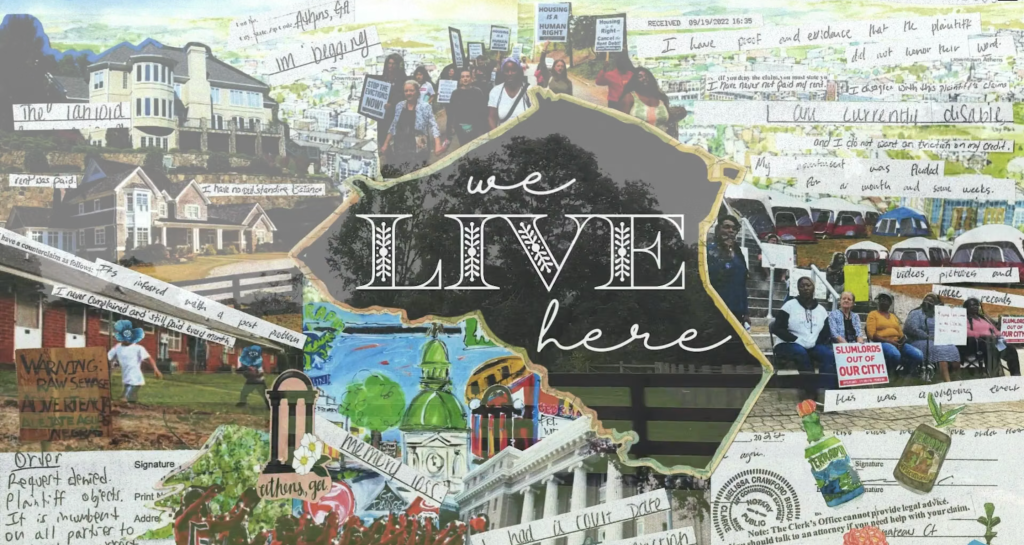
“We Live Here: Athens Anti-Eviction Storytelling” is a short film that I co-directed with Jess Martínez for the Women and Girls in Georgia Conference in 2024.
“We Live Here” is a personal and emotional portrait of the community-wide impacts of eviction and the inspirational work of Black, disabled women of color fighting to stay in their homes. In 2022, an out-of-state financial investor purchased 800 affordable housing units in Athens, GA, prompting an unprecedented mass eviction of long-term Athenians, particularly those who rely on federal rental subsidy vouchers or social security income. This film uplifts the call from local organizers fighting for safe and dignified housing for all.
StoryMaps
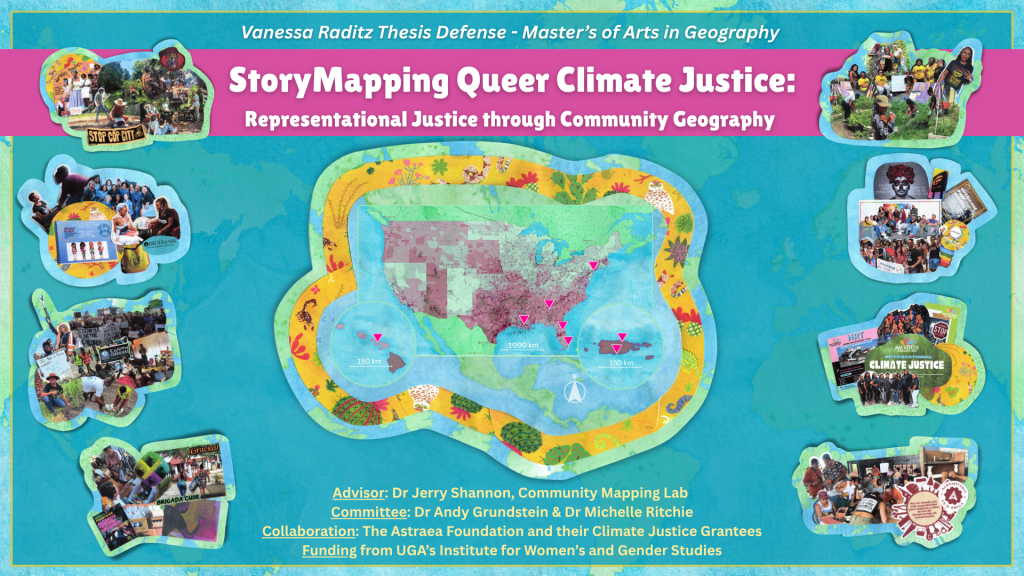
“StoryMapping Queer Climate Justice” was a three-year project that I conducted for my Masters of Arts in Geography, in collaboration with an LGBTQ+ philanthropic foundation. The foundation had released an open call for climate justice grants, and through this project, I highlighted the work of 8 queer and trans-led organizations across the United States, putting their stories “on the map.”
Through a collaboration with undergraduate students in the Community Mapping Lab, we also created a “Queer Disaster Risk Map” that layered climate projects, LGBTQ+ rights, and other social and ecological variables to visibilize areas of the country in greatest need of funding.
The interactive website is currently set on private at the request of my partner organization due to the political climate of the moment. You can see a PDF version of the project in the appendix to my thesis.
“Athens Anti-Eviction Mapping” was a semester-long project of the Community GIS course at UGA. I had been working for over a year with the community-based organization, Athens Housing Advocacy Team, to document the trends in eviction filings in Athens, Georgia during the critical transition period when COVID-era eviction prevention policies were expiring. I brought the idea to Dr. Shannon with the Community Mapping Lab to collaborate with the community group to provide students in the course this real-world opportunity to use GIS towards community benefit.
Through this collaboration with the Community GIS course, students had the opportunity to meet with local organizers, and organizers had the opportunity to get rigorous spatial analysis of the magistrate court records we had been collecting for over a year. At the end of the semester, all of the student teams had the opportunity to present their research in a public event at the local library, an event attended by several community leaders and an Athens-Clarke County Commissioner.
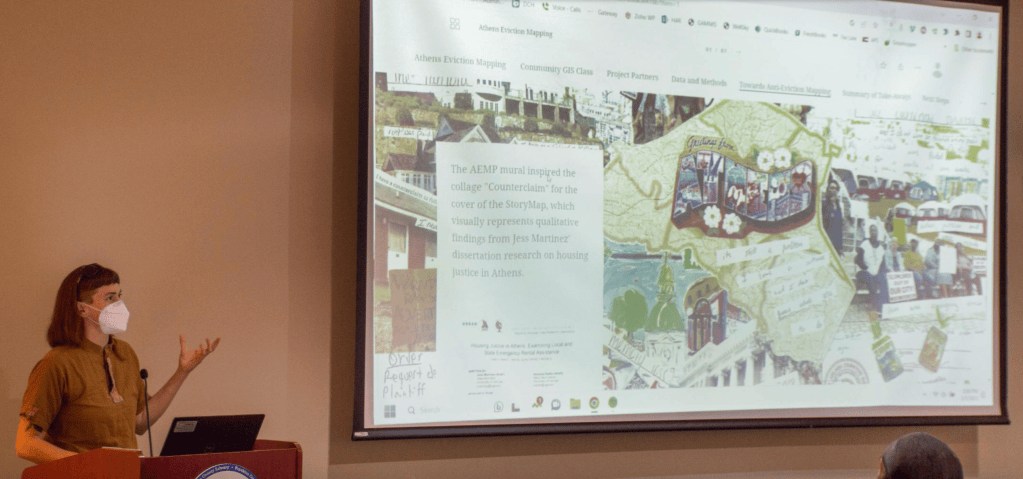
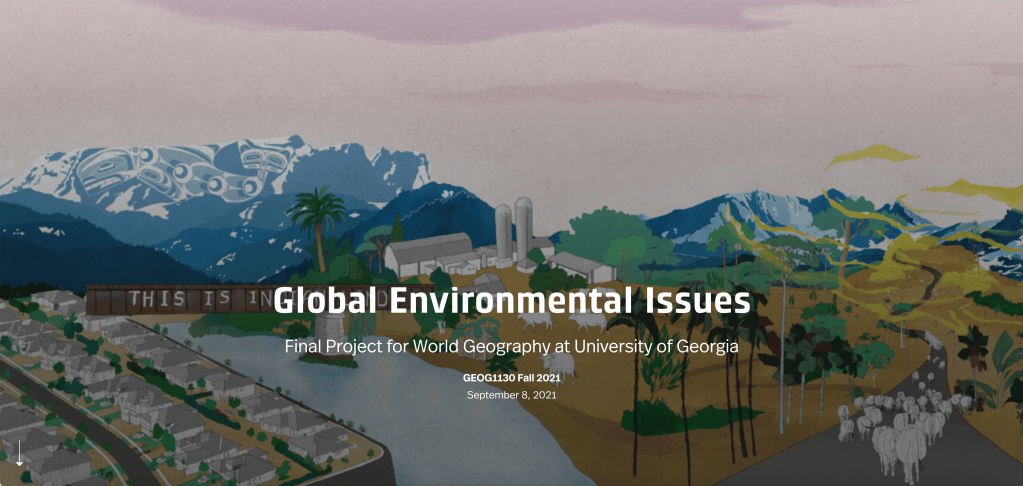
Over the course of three semesters, i developed a semester-long StoryMap project for the World Geography course I taught at UGA. Here is an example of a StoryMap that I created to explain the assignment, which highlights how I structured the project.
During class, I would open up the back end of the StoryMap to show students how I constructed the instructions and teach them the basic tools.
Images in this example come from Anna Tsing et. al.’s “Feral Atlas,” which we also explored in the course in preparation for this final assignment.

